Here are a few unique and SEO-optimized H1 options: 1. How I Found a Cheap eSIM Without Sacrificing Speed or Coverage 2. The Smart Way to Grab a Cheap eSIM for Your Next Trip 3. Where to Find a Cheap eSIM That Actually Works Well 4. Ditch the High Roaming Fees With a Cheap eSIM Setup 5. Why Cheap eSIMs Are the Best Travel Hack You’re Not Using Yet Let me know which one you like, or if you want a different angle. Imagine landing in a new country, exhausted, and realizing you can skip the overpriced airport SIM kiosks entirely—that’s the relief a cheap eSIM brings. It’s a digital SIM card you buy online for a few dollars, then scan a QR code to instantly connect to local networks without swapping your physical card. For the price of a coffee, you get reliable data for your whole trip, and you can top up or switch plans right from your phone. Simply check if your phone is eSIM-compatible, pick a low-cost plan for your destination, and activate it before you even board your flight.
Here are a few unique and SEO-optimized H1 options:
1. How I Found a Cheap eSIM Without Sacrificing Speed or Coverage
2. The Smart Way to Grab a Cheap eSIM for Your Next Trip
3. Where to Find a Cheap eSIM That Actually Works Well
4. Ditch the High Roaming Fees With a Cheap eSIM Setup
5. Why Cheap eSIMs Are the Best Travel Hack You’re Not Using Yet
Let me know which one you like, or if you want a different angle.
Imagine landing in a new country, exhausted, and realizing you can skip the overpriced airport SIM kiosks entirely—that’s the relief a cheap eSIM brings. It’s a digital SIM card you buy online for a few dollars, then scan a QR code to instantly connect to local networks without swapping your physical card. For the price of a coffee, you get reliable data for your whole trip, and you can top up or switch plans right from your phone. Simply check if your phone is eSIM-compatible, pick a low-cost plan for your destination, and activate it before you even board your flight.
What Exactly Is a Budget-Friendly eSIM and How Does It Save You Money?
A budget-friendly eSIM is a digital SIM profile sold at a steep discount, often for a specific data allowance or travel duration, bypassing expensive traditional roaming contracts. It saves you money by letting you compare and purchase local or regional data plans from third-party providers, often at a fraction of carrier rates. With a cheap eSIM, you avoid physical SIM shipping costs and activation fees, and you can instantly switch to the lowest-priced plan for your destination without buying a new card. This also prevents bill shock and unused data waste, as you pay upfront for exactly what you need. The core saving comes from buying a plan designed for your data usage, not a daily flat fee, which is how budget-friendly eSIMs cut travel connectivity costs immediately.
Breaking Down the Technology: How an Embedded SIM Differs From a Physical Card
A physical SIM is a removable plastic card holding a chip that stores your subscriber identity, while an embedded SIM (eSIM) is a solderless chip permanently fixed to your device’s motherboard. Instead of swapping cards, you download a digital profile over Wi-Fi or cellular data, which writes the same credentials directly to the chip. For cheap eSIM plans, this eliminates physical production, packaging, and shipping costs. The activation sequence is: scan a QR code, confirm the profile, and select it in settings. Since you can store multiple profiles, you switch carriers instantly without hunting for a local card, avoiding tourist markup. This makes cheap eSIM data roaming purely software-driven, cutting intermediary fees.
Why Digital Profiles Cost Less Than Traditional Roaming Plans
Traditional roaming plans are basically your home carrier acting as a middleman, and you pay for that convenience through inflated per-megabyte rates. A cheap eSIM digital profile skips that entirely because it connects directly to a local network’s pricing structure. You’re buying data in bulk at the destination’s local rates, which is why digital profiles slash roaming costs dramatically. Plus, you pre-pay for a set data package, avoiding the dreaded “bill shock” of usage-based roaming charges. There are no daily fees or connection surcharges stacked on top—just a flat, transparent price. This means you only pay for what you actually use, compared to roaming’s daily flat fee even if you use 1MB.
Hidden Fees to Watch Out For When Comparing Low-Cost Options

The lowest upfront price can hide several hidden fees in budget eSIM plans. Watch for top-up surcharges, where adding data costs far more per GB than the initial bundle. Some providers add a one-time “activation fee” during checkout, which only appears after entering your phone number. Others charge a “service fee” for reusing the same QR code on a new device. Look for “validity extension” costs—if your trip runs over, extending a plan by a single day often costs more than a new plan. Finally, check if customer support is free; many cheap options bill per chat or email, turning minor issues into paid tickets.
How to Find the Best Deal on a Prepaid Data Plan Without Overpaying
To find the best deal on a cheap eSIM without overpaying, start by auditing your real data usage through your phone’s settings—most travelers overbuy, so match the plan to your actual daily average. Compare prices across aggregators like esimdb or iRoamly, but always check the fine print for throttling speeds after a high-speed cap; a low price is worthless if streaming buffers. Prioritize providers that offer local network access instead of global roaming profiles, as this cuts costs by up to 70%. For short trips, skip multi-week packages and buy a compact 1GB/7-day plan, then top up only if needed. Finally, verify the eSIM supports hotspot tethering—some budget plans disable it, forcing you to buy a second SIM. The cheapest option is rarely the cheapest per GB, so calculate the cost-per-gigabyte before checkout.
Key Factors That Determine If a Cheap Plan Is Actually Worth It
A cheap eSIM only earns its keep when you verify actual usable coverage against your itinerary, not just the provider’s map size—check independent coverage tools for the specific cities you’ll visit. Confirm the data allowance is truly high-speed, as many budget plans silently throttle after a tiny “unlimited” threshold, making maps and messaging painfully slow. Scrutinize the validity period: a 30-day plan bought two weeks before travel wastes half its cost unless it activates on first connection. Also, compare the per-GB price after top-up fees, since low initial rates often hide expensive add-ons. Read recent user reviews for real-world speed stalls and activation failures, which cheap plans disproportionately suffer. *If you only need 2GB for navigation, a $3 plan beats a $10 plan with unneeded extras.*
Comparing Data Allowances and Validity Periods Across Discounted Providers
When comparing discounted eSIM providers, don’t just eyeball the gigabyte count—calculate the effective daily data cost by dividing the total allowance by the validity period. A 10 GB plan for 30 days may seem superior to 5 GB for 15 days, but if you only travel for a week, the shorter validity often yields a lower per-day price. Conversely, a 20 GB plan lasting 90 days beats a 15 GB plan lasting 30 days for long-term nomads, even if the upfront price is higher. Always map your actual trip length against the expiry date, because unused data expires. Providers frequently hide the renewal date in fine print, making a seemingly cheaper plan more expensive if you must repurchase mid-trip.

Q: How do I fairly compare validity periods across discounted providers?
A: Convert each plan to a cost-per-day metric (price ÷ validity days), then check whether the data allowance is realistically sufficient for that same window—otherwise, a lower cost-per-day becomes irrelevant if you run out early.
Using Price Comparison Apps and Websites to Spot Genuine Bargains
Price comparison tools are your first line of defense against inflated eSIM rates, but only if you filter correctly. Instead of simply sorting by lowest price, use aggregators like esimdb or CompareSim to check the *effective* cost per gigabyte, not just the headline figure. Cross-reference BazTel the same plan on two different sites, as reseller margins vary, and always toggle the “total price” option to reveal any hidden activation fees. Genuine bargains disappear quickly, so set alerts on apps like Saily or Airalo’s price-drop feature. For a 10-day trip needing 5GB, a sub-$8 total is fair; anything lower often involves throttled speeds. Verifying the data validity period ensures you aren’t paying for months you won’t use.
**Q: How do I avoid fake “discounts” on comparison platforms?**
A: Open the plan’s full terms—if the per-GB price drops only after spending over $30, it’s not a bargain; recalculate using your actual 2GB weekly usage, and ignore any plan whose promo code requires a new account, as that inflates long-term cost.
Step-by-Step Guide to Activating and Using an Affordable Digital SIM

To activate a cheap eSIM, first confirm your phone is carrier-unlocked and supports eSIM via its IMEI check online. Purchase a data-only plan from a budget provider like Airalo or Nomad, then scan the QR code sent to your email under “Cellular” > “Add eSIM.” Label it “Travel” to avoid conflicts, and set it as your secondary line while keeping your primary SIM active for calls. Always test the connection before departure by toggling data roaming on and selecting the local network manually. If activation fails, re-scan the QR code in airplane mode, restarting your device once. Q: How do I avoid overpaying? A: Choose a regional eSIM with shared data, not a country-specific one, and track usage in your provider’s app to top up only if needed.
Checking Device Compatibility: Which Phones Support Budget eSIMs
Before grabbing any budget eSIM, verify your phone supports it—otherwise, you’ll waste money. Most unlocked iPhones from the XS onward, Google Pixels from the 3a, and Samsung Galaxy S20 or newer models handle eSIMs fine. Budget eSIM compatibility hinges on your device’s region lock, so a phone bought in one country may block digital SIMs abroad. Check your settings under “Cellular” or “Connections” for an “Add eSIM” option; if it’s missing, your model likely won’t work with cheap plans. Even budget-friendly options like the Motorola G Power (2023) and some midrange Xiaomis now include eSIM support, but older flagships often lack it. Always confirm with your carrier’s compatibility page before purchasing, and look for “eSIM unlocked” in the phone’s specs. A quick IMEI check on the eSIM provider’s website also filters out incompatible devices instantly.
Check for an “Add eSIM” menu or IMEI verification first—if your phone lacks it, no budget eSIM will activate.
How to Scan, Install, and Switch Between Multiple Low-Cost Profiles
To activate a cheap eSIM profile, open your device’s camera and scan the QR code provided by your low-cost carrier—this auto-fills the activation code. For manual entry, go to *Settings > Cellular > Add eSIM*. After scanning, label each profile (e.g., “Travel-1,” “Local-Data”) to avoid confusion. To switch, disable the active line in *Cellular > SIMs* and enable the target one; most phones allow dual standby, so keep two profiles live simultaneously. Pre-download all profiles while on Wi-Fi to avoid costly roaming during setup. When data runs out, return to *Cellular* and toggle a previously installed plan—no re-scanning needed, as the eSIM remains stored.
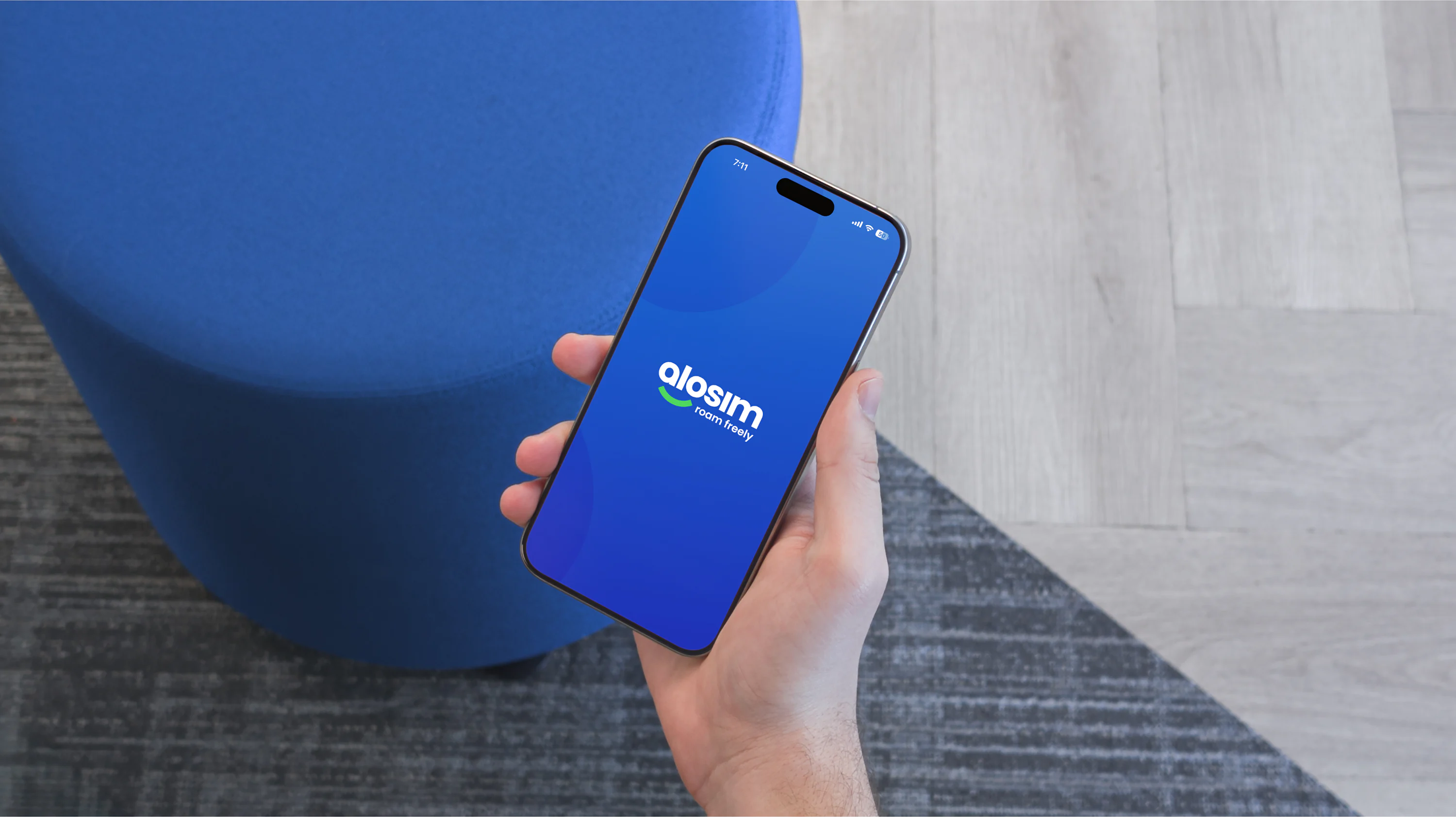
Scan QR codes, label profiles, disable/enable lines in Cellular settings, and pre-download to switch between low-cost eSIMs instantly without re-installation.
Troubleshooting Common Setup Issues Without Wasting Your Credit
When your cheap eSIM fails to activate, the first step is force-restarting your device—not purchasing a new plan, which wastes credit. Check that your APN settings exactly match the provider’s guide, as a single typo blocks data but still allows calls, masking the issue. If no signal appears, toggle airplane mode for 60 seconds to force a network re-registration. Always install the eSIM profile while on Wi‑Fi, then switch to cellular only after you see the carrier name. IMEI mismatches are another silent killer—confirm your phone is unlocked and the eSIM is assigned to the correct slot (not your physical SIM’s slot).
Q: Why does my cheap eSIM show “No Service” even after I paid?
A: You likely skipped the APN fix or installed the profile before removing the physical SIM—both waste zero credit to correct. Reinstall the profile, set the APN manually, and reboot once more. Forcing a reset under Settings > General > Reset > Reset Network Settings is your final free tool; only then contact support, since your credit isn’t deducted until data flows successfully.
Smart Ways to Maximize Value From a Low-Cost Travel Data Plan
To truly maximize a cheap eSIM travel plan, treat data as a finite resource by pre-loading offline maps for navigation and using Wi-Fi for heavy uploads like photo backups. Disable background app refresh and auto-updates, which silently drain your balance, and instead enable a strict data saver mode on your device. Compress your usage by routing traffic through a lightweight browser that strips images, and download entire Netflix or Spotify playlists while on hotel Wi-Fi for zero-cost offline consumption. When messaging, prefer text-based apps over video calls, and use your eSIM’s dashboard to track real-time consumption, pausing non-essential services the moment you near your cap. Finally, negotiate by choosing a plan with rollover data, if available, so unused gigabytes carry into your next travel day.
Tips for Stretching Your Data: Apps That Consume the Least
To stretch a cheap eSIM, prioritize text-based apps over media-heavy ones. WhatsApp and Telegram consume far less data than video-centric platforms, especially when you disable auto-download for photos and videos. Navigation apps like Google Maps can be set to offline mode, eliminating live traffic data usage entirely. For browsing, enable “Lite” mode in Chrome or use Opera Mini, which compresses pages server-side. Streaming music via Spotify or Apple Music, even at low quality, burns through ~0.5 MB per minute; instead, download playlists over Wi-Fi beforehand. Similarly, avoid Instagram reels and TikTok—their autoplay is a silent killer. Use offline-first mapping and compressed browsing for maximum longevity. A quick comparison: WhatsApp (~0.2 MB/min voice call) versus Instagram (~2 MB/min scrolling) shows a 10x difference.
When to Buy a Local Package vs. a Global Discounted Plan
Choose a local package when your itinerary is single-country and data-heavy—think maps, streaming, or constant uploads—since local rates per gigabyte crush global plans. Opt for a global discounted plan when hopping borders rapidly or when your stay is under three days, where activation fees and setup hassle outweigh per-GB savings. If you land with no time to research, a global plan’s instant connectivity beats fumbling for a local SIM at midnight. But for a week in one place, local wins every time. When to Buy a Local Package vs. a Global Discounted Plan? It’s simple: local for depth, global for breadth—and always verify coverage maps before committing.
Splitting One Purchase Across Two Devices or Reusing Unused Credit
When your cheap eSIM plan has unused data, don’t let it vanish—**reusing unused credit** is the smartest way to stretch every megabyte. Many providers let you split one purchase across two devices by installing the same eSIM profile on a phone and a tablet, so you share a single balance instead of buying twice. Before traveling, check your provider’s app for a “share” or “multi-device” toggle; if unavailable, manually enter the eSIM’s activation code on the second device to access the same pool. For leftover credit after a trip, some plans allow a one-time rollover to your next purchase. This tactic cuts costs dramatically for families or dual-device users.
Q: Can I split one purchase across two devices without extra fees? Yes—most budget eSIMs permit simultaneous installation on up to two gadgets, provided both use the same account login; just verify the terms in your dashboard before relying on it.
Frequently Asked Questions About Thrifty eSIM Purchases
When hunting for a cheap eSIM, the first question is usually whether “unlimited” data plans are truly worth it—for most travelers, they aren’t, so calculate your real usage and buy a smaller bucket instead. Another frequent concern is compatibility: check that your phone is carrier-unlocked and supports eSIM technology *before* you pay, since a low price means little if the profile won’t activate. You’ll also wonder about top-up options—confirm the provider allows adding data later without buying a whole new plan, as many budget eSIMs lock you into one-time allowances. Finally, ask about the activation window: cheap eSIMs often require installation within 30 days, so don’t purchase months ahead. Always read the coverage map’s fine print for speed throttling, not just the headline price. Prioritize providers with 24/7 chat support, because a $5 plan is useless if you can’t troubleshoot mid-trip.
Can You Refund or Top Up a Minimal-Cost Plan If You Run Out Early?
With a minimal-cost eSIM, refund eligibility typically ends once the plan is activated or any data is consumed; unused balances are rarely refundable. However, topping up early is usually possible, though some budget providers restrict top-ups to the same plan tier or require purchasing a new package instead. Check if your provider offers flexible top-up options for low-cost eSIMs, as smaller data add-ons may cost proportionally more per GB than the original plan. Some providers allow topping up only after the initial data is exhausted, while others permit preemptive additions. Always review the provider’s refund window before purchase, as it often expires within 24–48 hours of activation, not after data depletion.
Do Budget eSIMs Work in Every Country or Just Specific Regions?
Budget eSIMs do not work in every country; they are tied to specific regional coverage zones defined by the carrier’s roaming agreements. A cheap eSIM marketed for Europe, for example, will typically fail to connect in Asia or North America, even if the phone is unlocked. Before purchasing, you must verify that the target destination is listed on the plan’s coverage map, and check whether the data allowance applies across multiple countries in that zone or just one. This makes **regional eSIM compatibility checks** essential, since a budget plan that works flawlessly in Spain will not automatically function in Mexico, regardless of the device’s technical capabilities.
Is It Safe to Buy From Lesser-Known Sellers Offering Very Low Rates?
Rock-bottom eSIM prices from unknown shops can be tempting, but safety hinges on a few checks. A lesser-known seller offering very low rates might be reselling stolen data or a plan that fails mid-trip, leaving you stranded without coverage. Before paying, verify the seller has recent, real user reviews on independent platforms, and confirm they actually provide a working QR code before your departure. **Trust your gut on unrealistically low rates**—if a 10GB plan costs less than a coffee, something’s likely off. Stick to a small test purchase first.
Q: Is it safe to buy from lesser-known sellers offering very low rates?
A: Only if you check reviews, demand immediate delivery, and test the eSIM immediately—otherwise, you risk losing money or data access with zero support.